
 EN
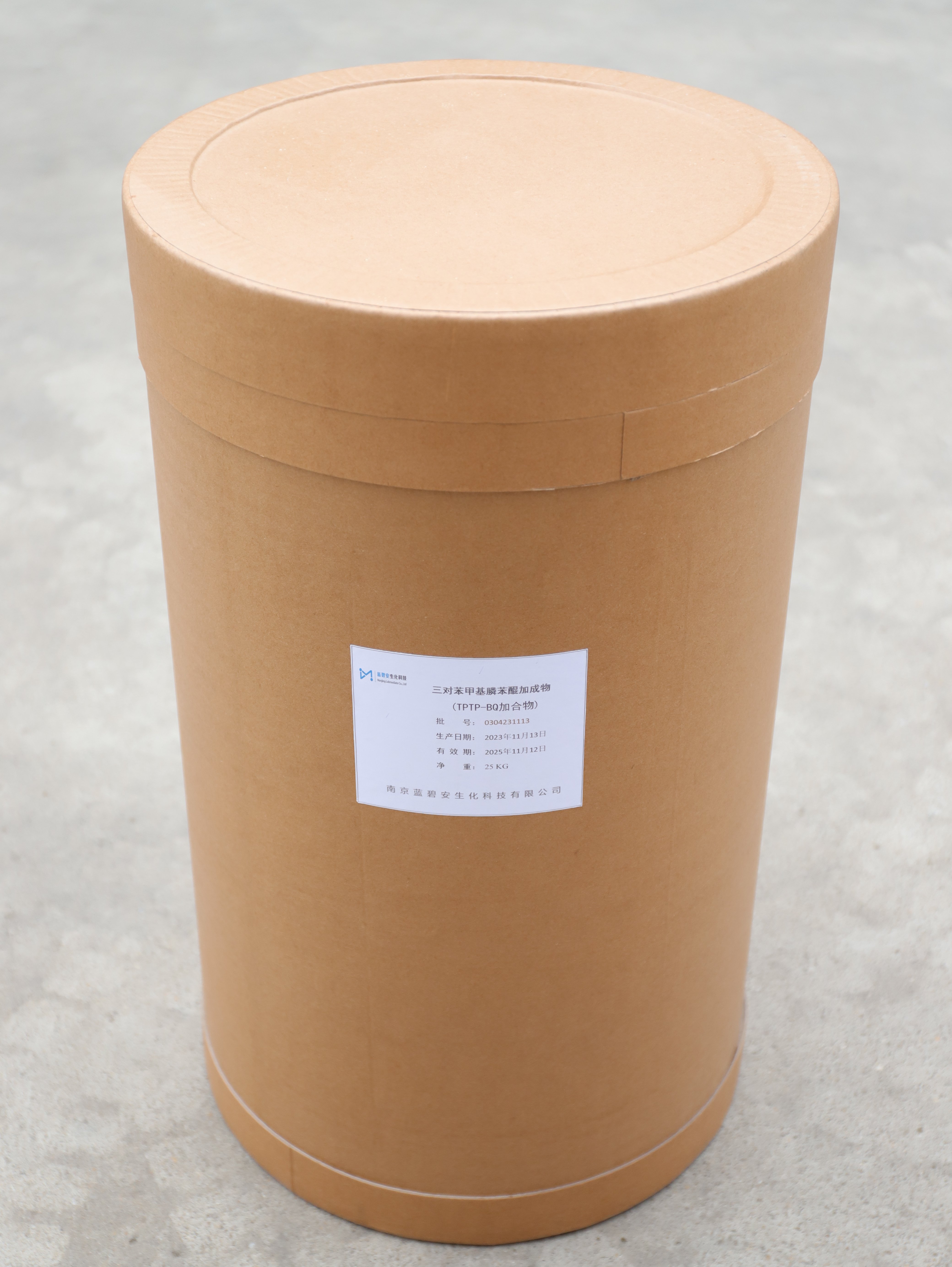
A phosphine quinone adduct can act as a heat-responsive source of phosphine because its bound form and its separated components may exist in a reversible balance. When heating favors dissociation, phosphine becomes available to participate in a reaction. The practical outcome depends on the adduct structure, solvent, temperature, and reaction partners, so heat alone does not guarantee a useful release rate.

The central idea is thermal weakening of the association, followed by formation of free, reactive phosphine and the quinone-derived partner. For a phosphine quinone adduct, heating can shift this balance toward dissociation, but the extent and timing are system-specific. Understanding that distinction helps chemists select conditions, interpret conversion, and avoid treating the material as a simple temperature-triggered switch.
Thermal basis of phosphine release
A reversible association under changing conditions
In a phosphine quinone adduct, phosphine is associated with a quinone-derived component rather than behaving exactly like an isolated free reagent. The association is described as an equilibrium: bound material can separate, while released components may also recombine. Heating changes the relative favorability and speed of these processes. The observed amount of available phosphine reflects both the equilibrium position and the rate at which it is reached.
The precise bonding description depends on the specific compound and its environment, so a phosphine quinone adduct should not automatically be assigned one universal dissociation pathway. In practical terms, heating supplies energy that can help the system cross the barrier to separation. If the free phosphine is consumed by a reaction partner, its removal can further favor continued release, depending on the reaction network.
What heat changes at the molecular level
As temperature rises, molecular motion increases and the rates of association and dissociation generally change. For a phosphine quinone adduct, the useful question is not simply whether heat breaks a bond, but whether the chosen temperature and medium produce a meaningful concentration of free phosphine on the reaction timescale. Dissociation may be reversible, and the released phosphine may be captured quickly or remain in solution.
That distinction matters when planning a synthesis. If a phosphine quinone adduct releases phosphine gradually, the active species may be generated in situ rather than added all at once. This can influence reaction initiation, selectivity, and the concentration profile of the reagent. These effects are possibilities to test for a particular transformation, not guaranteed benefits of every adduct or heating protocol.
How release proceeds in a reaction mixture
From heating to available phosphine
A useful way to understand the process is to follow the sequence: the mixture warms, the associated species gains access to dissociation pathways, and free phosphine appears alongside the quinone-derived component. For a phosphine quinone adduct, that released phosphine is the form available to enter a subsequent chemical step. The reaction partner may then trap or consume it, affecting how much remains unbound.
When evaluating a specific material, researchers can begin with its documented identity and compatibility with the intended reaction. A phosphine quinone adduct based on triphenylphosphine and benzoquinone is one example to consider. Its behavior still needs to be assessed in the chosen solvent and reaction system; the compound name by itself does not establish a release temperature or conversion profile.
Why reaction partners affect the outcome
The released species rarely exists in isolation in a working flask. Substrates, catalysts, additives, and solvent molecules can interact with phosphine or the quinone-derived partner. In a phosphine quinone adduct system, a reaction that consumes free phosphine may pull the reversible process toward further dissociation, whereas competing interactions may reduce the amount available for the desired step.
Solvent choice also influences solubility, molecular interactions, and heat transfer. A phosphine quinone adduct that disperses poorly may show uneven behavior, while a well-mixed solution can offer more consistent contact between components. Atmosphere and moisture sensitivity should be considered from the chemistry of the phosphine and substrate, rather than assumed to be identical across all compounds. Small-scale trials help reveal these practical effects.
Conditions and evidence for controlled activation
Choosing and adjusting the heating conditions
A sound procedure starts with the reaction’s temperature limits, solvent boiling point, substrate stability, and required timescale. For a phosphine quinone adduct, begin with a measured heating plan and avoid assuming that a higher temperature is automatically better. Excessive heat can promote side reactions or degrade sensitive components, while insufficient heat may leave too little free phosphine for the intended transformation.
Use a controlled heating source, consistent stirring, and a defined sampling schedule when comparing conditions. Change one major variable at a time where practical, such as temperature or reaction time, so that results remain interpretable. If the phosphine quinone adduct is being introduced into an established reaction, confirm that the new heating profile does not exceed the stability window of other reagents or the vessel setup.
Monitoring release and interpreting results
Evidence of activation should come from analytical observation, not temperature alone. Depending on the system, suitable methods may include phosphorus nuclear magnetic resonance, chromatography, or analysis of reaction conversion and byproducts. A phosphine quinone adduct can be followed by comparing signals or composition before and after heating, with suitable controls to distinguish dissociation from decomposition or reaction consumption.
A practical control experiment can heat the adduct without the intended substrate, then compare it with a complete reaction mixture. This helps separate thermal behavior from phosphine capture by the substrate. For a phosphine quinone adduct, documenting concentration, solvent, atmosphere, temperature, and time makes the findings reproducible. Analytical assignments should be supported by appropriate references or standards when possible.
FAQ
Does heating always release all the phosphine?
No. A phosphine quinone adduct may dissociate only partly under a given set of conditions, and released phosphine can recombine or react. The amount available depends on the compound, temperature, solvent, time, and other mixture components. Evaluate the actual system rather than assuming complete release.
Can the released phosphine be used immediately?
Often the purpose is to make phosphine available in the reaction mixture, but usefulness depends on its compatibility and reaction rate. A phosphine quinone adduct may generate phosphine as another reaction consumes it. Confirm suitable conditions and monitor the transformation to establish whether release and capture occur as intended.
How can release be confirmed experimentally?
Choose an analytical method suited to the compound and reaction, then compare heated and unheated samples. A phosphine quinone adduct can be assessed using phosphorus NMR or complementary compositional analysis. Include controls for decomposition and substrate-driven consumption, and record the full heating conditions so results can be interpreted and repeated.